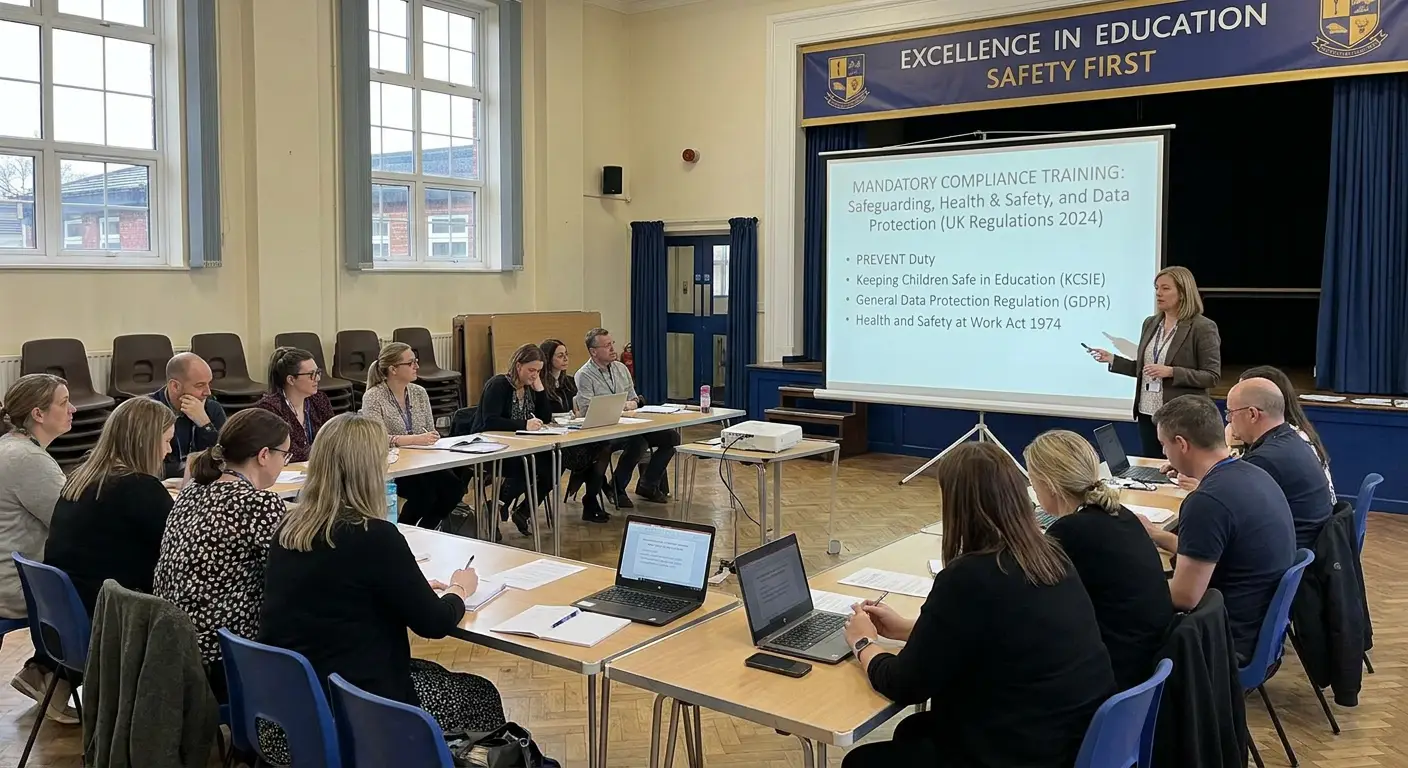
How young people can get a job without experience
Britain has almost a million young people outside education, employment and training. What if the solution isn’t simply more qualifications, more careers advice or more job applications?

The Experience Paradox: Why Britain’s Young People Can’t Get Jobs Without Experience - and Can’t Get Experience Without Jobs
Britain has almost a million young people outside education, employment and training. What if the solution isn’t simply more qualifications, more careers advice or more job applications? What if we’ve misunderstood how people actually become ready for work?
The Interview That Never Happens
Imagine two 18-year-olds applying for the same entry-level job.
Both have similar qualifications. Both are intelligent, enthusiastic and willing to learn.
But one has spent a few weeks helping a local business. They’ve attended meetings, answered customer enquiries, collaborated with colleagues and experienced what happens when something goes wrong.
The other has never set foot inside a workplace.
Who gets the job?
Most employers would probably favour the first candidate.
Not necessarily because they’re more talented, but because they’ve already demonstrated something that qualifications alone cannot establish: an understanding of how work actually works.
Now consider the uncomfortable question.
What happens to the second candidate if nobody gives them that first opportunity?
This is the experience paradox.
Employers want experienced candidates. Young people need employers to give them experience. And somewhere between those two perfectly reasonable expectations, an entire generation risks being left behind.
Almost One Million Young People. One Enormous Problem.
The numbers are difficult to ignore.
According to the Office for National Statistics, approximately 981,000 young people aged 16–24 were not in education, employment or training (NEET) between April and June 2026.
That’s 13% of young people in that age group.
In May to July 2026, youth unemployment stood at 16.4%, compared with 14.3% a year earlier.
These figures represent different measures, but together they reveal a troubling picture. Too many young people are struggling to make the transition from education into employment.
And the consequences extend far beyond the individuals concerned.
Every young person who struggles to enter employment represents potential that our economy is failing to develop.
Potential entrepreneurs.
Potential engineers.
Potential healthcare professionals.
Potential teachers.
Potential people who could make an extraordinary contribution to society.
The problem isn’t simply that Britain has too few jobs.
It’s that we haven’t built enough effective bridges between learning and earning.
And those bridges matter more than ever.
The Hidden Curriculum Nobody Teaches
Think about your first job.
What did you actually learn?
Perhaps you learned how to communicate with someone much older than yourself.
How to deal with an unhappy customer.
How to arrive somewhere on time, every day.
How to work with colleagues you wouldn’t necessarily choose as friends.
How to take responsibility when you made a mistake.
Or perhaps you discovered something more important: that you were capable of doing things you’d never previously imagined.
These are not trivial experiences.
They are the foundations of employability.
Yet much of our education system continues to concentrate on what young people know, rather than what they can demonstrate in a real working environment.
Of course, academic knowledge matters enormously.
But there’s a difference between understanding teamwork and actually working in a team.
There’s a difference between learning about customer service and dealing with a real customer.
And there’s a difference between being told you’re capable of something and discovering that capability for yourself.
Confidence is rarely something we acquire through instruction alone. More often, it emerges through experience.
This is particularly important for young people who lack family connections to professional workplaces.
Some teenagers grow up surrounded by adults who can introduce them to employers, explain career pathways or arrange informal opportunities.
Others don’t.
That difference can become an invisible advantage long before anyone submits their first job application.
If work experience depends on who your parents know, we shouldn’t be surprised when opportunity becomes unequal.
What If Work Experience Wasn’t Just One Week?
Traditionally, work experience has often meant spending a week or two in an organisation, observing employees and occasionally completing simple tasks.
For some young people, that experience is transformative.
For others, it’s little more than watching somebody else work.
But the world has changed.
Businesses increasingly operate through digital platforms. Teams collaborate remotely. Projects involve people working across different locations and time zones.
And many meaningful workplace activities can be broken into smaller, structured experiences.
Consider a secondary school pupil interested in marketing.
Rather than simply watching a marketing professional for a week, imagine they were given a real challenge.
A local charity needs help promoting a fundraising event.
The pupil receives a brief, researches the audience, creates promotional material and presents their ideas.
A professional mentor provides feedback.
The charity uses some of the work.
Suddenly, the pupil hasn’t merely observed marketing.
They’ve practised it.
They have something tangible to demonstrate.
And, perhaps most importantly, they’ve discovered whether they enjoy it.
Now imagine the same approach applied to:
Technology and software development.
Healthcare administration and communications.
Engineering and manufacturing.
Hospitality and customer service.
Business administration and finance.
Environmental and community projects.
Media, design and digital marketing.
The possibilities are substantial.
Not every activity needs to involve a full-time placement. Short, supervised projects can introduce young people to workplace expectations and build confidence before, alongside and after in-person experience.
The important distinction is between watching work happen and being trusted to contribute to it.
Britain Is Beginning to Recognise the Problem
The government has committed to giving young people access to two weeks’ worth of work experience during secondary education.
Updated careers guidance also places greater emphasis on meaningful experiences of workplaces, rather than simply arranging employer encounters.
Meanwhile, the government’s Youth Guarantee is intended to improve access to employment, training and apprenticeships.
In May 2026, the Department for Work and Pensions announced plans for 300,000 additional work experience and training placements over three years.
These are encouraging developments.
But they raise an important question.
How do we turn hundreds of thousands of opportunities into meaningful, measurable learning experiences?
Because arranging a placement is only the beginning.
Someone needs to establish what the young person should learn.
Someone needs to prepare them.
Someone needs to support the employer.
Someone needs to capture feedback.
And someone needs to establish whether the experience actually improved the young person’s prospects.
Without those elements, we risk measuring success by the number of placements arranged rather than the difference those placements make.
The Missing Link: Learning Before, During and After Work
Imagine a different approach.
A 16-year-old is preparing for their first workplace experience.
Before starting, they complete a short digital learning programme introducing professional communication, workplace expectations, safeguarding, teamwork and basic digital skills.
They meet their employer or mentor.
They understand what they’re expected to achieve.
During their placement, they complete practical tasks, record their experiences and receive feedback.
Afterwards, they reflect on what they’ve learned.
Their employer confirms which skills they’ve demonstrated.
They receive a certificate and build a portfolio of evidence they can use in future applications.
The experience becomes more than a week in somebody else’s workplace.
It becomes part of a continuous learning journey.
Now imagine this happening across an entire local authority.
Hundreds of employers.
Thousands of young people.
Schools, colleges, charities and training providers collaborating around a shared framework.
For the first time, it becomes possible to see not simply how many young people participated, but what they actually gained.
That’s a fundamentally different proposition.
Why Employers Should Care
It’s tempting to frame youth unemployment exclusively as a problem for schools, government or young people themselves.
But employers have an enormous stake in solving it.
Businesses regularly report difficulties recruiting people with the skills, confidence and workplace behaviours they need.
Yet many organisations struggle to provide work experience because of limited time, administrative complexity and uncertainty about how to structure meaningful activities.
A small business might be willing to help three young people.
But creating training materials, coordinating placements, supervising activities and recording outcomes can feel overwhelming.
What if much of that preparation could be handled through a shared digital learning platform?
What if an employer could select a ready-made work experience programme, adapt it to their organisation and invite participants to complete it?
What if young people arrived already understanding basic workplace expectations?
And what if mentors could provide feedback without completing extensive paperwork?
Suddenly, participation becomes more manageable.
And rather than viewing work experience as an occasional charitable activity, employers can begin seeing it as part of their future talent pipeline.
The potential benefits extend beyond recruitment.
Employees develop mentoring skills.
Businesses strengthen community relationships.
Young people gain confidence.
And organisations help create a more capable future workforce.
The AI Opportunity: A Personal Learning Coach
There’s another development that could fundamentally change how we support young people entering employment.
Artificial intelligence.
Consider a young person who has never attended a job interview.
They may have no professional contacts and nobody at home who can explain what employers expect.
An AI learning coach could help them practise.
It could ask interview questions, help them structure answers and explain unfamiliar workplace terminology.
During a placement, it could help them reflect on challenges.
What went well today?
What did you find difficult?
How could you handle that conversation differently?
What skills did you demonstrate?
Importantly, AI shouldn’t replace the human relationships at the heart of meaningful work experience.
A real employer, mentor or supervisor remains essential.
But AI can provide additional guidance between those human interactions.
It can help young people prepare questions they might otherwise feel embarrassed to ask.
It can offer opportunities to practise.
And it can make structured learning support available beyond the classroom or workplace.
Used responsibly, with appropriate safeguarding, permissions and human oversight, AI could help make personalised employability support more accessible.
The technology is not the solution by itself.
But it could help make a better model of workplace learning possible at a much greater scale.
How Learner Journey Can Help Turn Work Experience Into Real Outcomes
At LearnerJourney.com, we’re interested in a simple question:
What if every young person could build a record of what they can actually do, rather than relying solely on qualifications and a CV?
Learner Journey is an AI-first learning platform designed to bring learning content, activities, assessment, mentoring and progress tracking together.
For schools, colleges, employers, charities, local authorities and organisations working with young people, it offers a way to structure practical workplace learning and capture evidence of progress.
Here’s what that could look like.
1. Prepare Young People Before Their Placement
Organisations can create short, accessible learning programmes covering essential employability skills.
These might include workplace communication, teamwork, time management, professional behaviour, digital literacy and interview preparation.
Young people can work through videos, interactive pages, quizzes and assessments before meeting their employer.
The outcome: Better-prepared participants who understand what to expect and feel more confident entering a workplace.
2. Give Young People Real Projects
Instead of relying entirely on observation, organisations can build structured learning pathways around practical workplace challenges.
For example:
A marketing challenge: Develop a social media campaign for a local charity.
A technology challenge: Help test a website and identify improvements.
A business challenge: Research customer needs and present recommendations.
A community challenge: Plan an event and help promote it.
Each activity can have learning objectives, supporting resources, assessment criteria and opportunities for feedback.
Projects can complement in-person placements, with appropriate supervision and safeguards.
The outcome: Young people develop practical skills and produce evidence of their work.
3. Provide AI-Powered Learning Support
Learner Journey’s AI Tutor can support learners as they work through activities.
Young people could use it to practise workplace conversations, prepare for interviews, understand tasks or reflect on what they’ve learned.
Organisations can configure permissions and controls appropriate to their learners.
Human mentors remain responsible for supervision, feedback and important decisions.
The outcome: More accessible, personalised learning support without expecting employers to answer every question individually.
4. Capture Skills, Feedback and Achievements
Work experience shouldn’t disappear when a placement ends.
Learner Journey can support assessments, forms, progress tracking and certificates.
Organisations can use these features to capture completed activities, learner reflections and supervisor feedback.
Over time, young people can build a record of their achievements.
The outcome: Tangible evidence that can support CVs, interviews, apprenticeship applications and progression into further training.
5. Connect Schools, Employers and Communities
A school might work with ten local employers.
A multi-academy trust might collaborate with fifty.
A regional employability programme might involve hundreds of organisations.
Learner Journey’s workspaces, learning pathways, events and administrative features can provide the foundation for coordinating learning across these partnerships.
Additional placement-matching or employer-management processes can be organised alongside the platform where required.
The outcome: A more consistent approach to workplace learning, with less duplication and clearer responsibilities.
6. Measure What Actually Changes
This may be the most important opportunity of all.
Imagine an employability programme involving 500 young people.
Rather than reporting only that 500 placements were arranged, the organisation could aim to measure:
How many completed their preparation.
How many finished practical projects.
Which skills participants demonstrated.
How confidence changed before and after.
How employers rated workplace readiness.
How many progressed into interviews, apprenticeships, education or employment.
Learner Journey can capture learning activity and assessment evidence. Longer-term employment outcomes can be added through follow-up surveys and linked programme records.
The outcome: Better evidence of impact, allowing organisations to identify what works and improve future programmes.
What Could This Look Like in Practice?
Imagine a local authority working with 20 schools, 50 employers and 1,000 young people.
It launches a structured employability programme supported by Learner Journey.
Every participant completes an introductory learning pathway.
Each young person then undertakes a supervised workplace placement, a practical employer-led project or a combination of the two.
Mentors provide feedback.
Participants reflect on their experiences.
Certificates recognise completed learning.
Schools and programme coordinators review progress.
After three and six months, the programme follows up to understand what happened next.
Did participants enter further education?
Did they secure apprenticeships?
Did they find employment?
Did their confidence improve?
Did employers identify candidates they wanted to recruit?
These are the questions that matter.
The programme could set ambitious targets for completion, employer participation, demonstrated skills and progression.
Those targets would need to be tested against real results rather than presented as guaranteed outcomes.
But the principle is powerful.
We stop counting opportunities alone and start measuring the capabilities those opportunities create.
The First Opportunity Changes Everything
Return to those two 18-year-olds applying for their first job.
One has workplace experience.
The other doesn’t.
Now imagine that the second young person has completed a structured programme.
They’ve worked on a real business challenge.
They’ve practised professional communication.
They’ve received feedback from an employer.
They’ve developed a portfolio demonstrating what they can do.
And they’ve discovered a little more about what they’re good at.
They may still lack traditional employment experience.
But they’re no longer arriving empty-handed.
They have evidence.
They have confidence.
They have a story to tell.
And that changes the conversation.
Britain’s youth unemployment crisis won’t be solved by technology alone. It requires employers willing to participate, educators prepared to collaborate, and sustained investment in meaningful opportunities.
But technology can help us organise those opportunities, make learning more accessible and understand whether our efforts are working.
Perhaps the most important question we should be asking isn’t why so many young people lack experience.
It’s why we’ve designed a system in which gaining that first experience can be so difficult.
Young people shouldn’t need experience to deserve an opportunity. They need an opportunity to gain experience.
And if we get that right, we won’t simply help more young people find jobs.
We’ll help them discover what they’re capable of becoming.
Help Build the Next Generation of Workplace Learning
At Learner Journey, we want to work with schools, multi-academy trusts, colleges, employers, local authorities, charities and organisations supporting young people who are not in education, employment or training.
We’re particularly interested in partnerships that combine practical work experience, AI-supported learning, mentoring and measurable progression outcomes.
Whether you’re coordinating placements, delivering employability programmes or helping disadvantaged young people take their first steps into work, we’d welcome the opportunity to explore what we could build together.
Let’s move beyond simply offering work experience. Let’s make every experience count.
Sources and further reading
Office for National Statistics: Young people not in education, employment or training, August 2026. (Office for National Statistics)
House of Commons Library: Youth unemployment statistics, September 2026. (House of Commons Library)
Department for Education: Careers guidance and meaningful workplace experiences. (GOV.UK)
Department for Work and Pensions: Announcement of 300,000 work experience and training placements, May 2026. (GOV.UK)
House of Commons Library: Youth Guarantee briefing, July 2026. (House of Commons Library)