Young People and Work
Nearly one million young people in Britain are out of work or education. Discover why connecting learning directly to opportunities is key to solving the UK youth employment crisis.

Founder, Learner Journey

The Missing First Rung: Why Britain Needs to Rethink the Journey from Education to Employment
The Milburn Report reveals a crisis affecting nearly one million young people. But what if the solution isn't simply more education, more training or more jobs? What if the real problem is that we've failed to connect them?
The Paradox of a Generation
Imagine two young people.
Both are 18 years old. Both have completed their education. Both have ambitions, interests and abilities. Both want to work.
One has parents who know people in business. They arrange a week of work experience, introduce their child to an employer and help them prepare for an interview.
The other has none of those connections.
A year later, their lives may look remarkably different.
Not necessarily because one is more talented. Not because one worked harder. But because one had access to something the other didn't.
An opportunity.
This is the uncomfortable truth at the heart of Britain's youth employment crisis.
On 17 November 2026, former Health Secretary Alan Milburn published his landmark report, From a Welfare State to a Working State: A New Settlement for the Next Generation.
The findings should concern every school, university, employer and policymaker in Britain.
Nearly one million young people aged 16 to 24 are not in education, employment or training.
They are commonly described by the acronym NEET.
But an acronym can conceal as much as it reveals.
Behind that number are young people who may have qualifications but no experience, ambition but no direction, or potential but no opportunity to demonstrate it.
And there is something particularly troubling about the problem.
We have built one of the most sophisticated education systems in the world. We have more digital learning resources than ever before. Artificial intelligence can now explain difficult concepts, personalise learning and help people develop new skills.
Yet the transition from education into employment remains remarkably fragmented.
We have become very good at delivering education. We have been less successful at connecting education to opportunity.
What Alan Milburn Wants to Change
Milburn's report challenges an assumption that has shaped employment policy for decades.
The assumption is simple: if we make young people more employable, jobs will follow.
Improve their qualifications. Develop their skills. Teach them how to write a CV. Prepare them for interviews.
All sensible things.
But Milburn identifies a fundamental weakness in this approach.
What happens when the opportunities themselves are missing?
In his report, he argues that the first rung of the employment ladder has narrowed. Entry-level jobs increasingly demand experience, confidence and connections that young people are supposed to acquire through employment itself.
It is a paradox.
You need experience to get a job. But you need a job to get experience.
Milburn proposes a new settlement built around several important changes:
Earlier intervention before disengagement.
Stronger connections with employers.
More meaningful work experience.
Better education-to-employment pathways.
Apprenticeships and technical opportunities.
Joined-up local employment support.
Greater accountability for sustained outcomes.
Perhaps most importantly, Milburn argues that education providers should be judged not simply by qualifications achieved, but by whether young people successfully progress into the next stage of learning or employment.
That is a profound change in thinking.
It shifts the question from What did the student learn? to What did that learning enable the student to do next?
And it raises an interesting possibility.
What if we could build the infrastructure to make that journey visible, connected and accessible to every young person?
The Missing Infrastructure Between Learning and Work
Think about how a young person currently moves towards employment.
They attend school or college.
They might receive careers advice from one provider, complete an online course through another, search for jobs on a third platform and apply for work experience through a completely different process.
Their achievements sit in one system. Their applications sit in another. Their interview preparation happens somewhere else.
The employer often sees only a CV.
The education provider may never discover what happened after the student left.
And the young person is expected to navigate all of it.
We have digitised individual parts of the journey without necessarily connecting them.
This is the challenge we have been thinking about at Learner Journey.
Our starting point is that education, employability, careers and employment should not exist as disconnected activities.
They should be parts of one continuous experience.
An AI-first employability platform should help a young person discover opportunities, develop relevant skills, practise for employment, demonstrate their abilities and ultimately connect with employers.
That is what Learner Journey is designed to enable.
1. The Jobs Module: Connecting Learning with Real Opportunities
Milburn makes an important distinction between improving the supply of employable young people and increasing the demand for their skills.
Employers must become part of the solution.
This is where the Learner Journey Jobs Module becomes particularly relevant.
Imagine a local authority, college, university or multi-academy trust creating an employability community.
Local employers could advertise entry-level jobs, apprenticeships, internships and work experience opportunities.
Students could discover opportunities connected to their interests and ambitions.
Instead of treating a jobs board as an isolated destination, the platform could connect opportunities to the learning and preparation that help students pursue them.
For example, a student interested in digital marketing might discover an apprenticeship with a local company.
They could then follow a relevant learning path, complete assessments, practise interview questions and build confidence before applying.
The employer gets access to a better-prepared candidate.
The student gets a clearer route into employment.
The opportunity becomes the destination. Learning becomes the route.
This matters because employability cannot be solved by training alone. Young people need employers willing to open doors.
2. Learning Paths: Making the Route to Employment Visible
Consider how we teach someone to become a doctor.
There is a clearly defined pathway.
Qualifications, training, practical experience, assessment and progression are all connected.
Now consider a 17-year-old who wants to work in technology, construction, healthcare or business.
Where is their pathway?
For many young people, the answer is unclear.
Learner Journey allows organisations to create structured Employability Learning Paths.
These can combine learning materials, videos, practical activities, quizzes, assessments and certificates into a coherent programme.
A pathway might look like this:
Discover a career → Understand the skills → Complete training → Demonstrate competence → Prepare for interviews → Apply for opportunities.
A college could create a pathway into healthcare employment.
A local authority could develop a construction skills pathway linked to regional employers.
A university could create a graduate employability programme covering communication, teamwork, AI literacy and professional skills.
An employer could even create its own introductory learning pathway, helping prospective applicants understand the organisation and the roles available.
This addresses one of Milburn's central concerns: the need to connect education more directly with the world of work.
And it makes something previously invisible much more tangible.
Progress.
A young person can see what they have achieved, what comes next and why it matters.
3. Careers Events: Turning Encounters into Opportunities
There is something powerful about meeting an employer.
A conversation lasting five minutes can change someone's understanding of an entire industry.
A careers fair might introduce a student to a profession they had never considered.
A workplace visit might give them the confidence to apply for an apprenticeship.
A discussion with an engineer, nurse or entrepreneur might challenge their assumptions about what is possible.
Milburn's emphasis on earlier exposure to employment makes these experiences especially important.
Through Learner Journey's Events Module, organisations can create and manage:
Careers fairs and employer showcases.
Apprenticeship and recruitment events.
Work experience information sessions.
Industry talks and employer webinars.
Skills workshops and networking sessions.
University and college careers programmes.
Events can have dedicated branded pages, registration processes, speakers, schedules and supporting learning resources.
But the real opportunity is connecting the event to what happens afterwards.
Imagine a student attending a healthcare careers event.
They discover an interest in nursing.
They join a healthcare employability learning path.
They complete an introductory assessment.
They practise an interview.
They discover a relevant work experience opportunity.
One event becomes the beginning of a journey rather than a single afternoon of inspiration.
The measure of a successful careers event shouldn't simply be attendance. It should be what happens next.
4. The AI Tutor: Giving Every Young Person a Coach
Return to our two young people.
One has a parent who can help prepare for interviews, explain workplace expectations and offer career advice.
The other does not.
This difference in access to guidance is one of the quieter inequalities in the employment system.
It is also an area where artificial intelligence could make a meaningful difference.
Learner Journey includes an AI Tutor designed to support personalised learning.
Within an employability programme, this technology could act as a learning and career preparation companion.
A student might ask:
What skills do I need to become an electrician?
Can you explain what a project manager does?
Help me understand how to answer an interview question.
Can we practise talking about my strengths?
What should I learn before applying for this apprenticeship?
The AI Tutor can help explain concepts, support learning, check understanding and guide students through difficult subjects.
It can adapt to the learner's progress and help identify areas where additional practice is needed.
Crucially, the student can ask questions repeatedly without feeling embarrassed.
That matters.
Some young people have access to tutors, mentors, professional networks and experienced family members.
Others have very little of that support.
AI cannot replace a good teacher, careers adviser or human mentor.
But it can make useful guidance available more consistently and at scale.
What if personalised employability coaching became something every young person could access, rather than something determined by their family connections?
That is an opportunity worth exploring.
5. Assessments: Measuring Potential, Not Just Qualifications
One of the problems with traditional recruitment is that employers often rely on proxies for ability.
Qualifications.
Previous job titles.
Experience.
The quality of a CV.
These indicators can be useful, but they do not always reveal what someone is capable of doing.
And for a young person who has never worked, the absence of experience can become an enormous disadvantage.
Learner Journey's Assessments Module allows organisations to create structured assessments, quizzes and scored learning activities.
In an employability context, these could be used to explore:
Communication and workplace understanding.
Digital and AI literacy.
Problem-solving and practical knowledge.
Industry-specific technical skills.
Progress through employability programmes.
Readiness for further training.
Imagine an employer seeking junior customer service staff.
Rather than relying exclusively on previous experience, they could provide an introductory learning pathway followed by a practical assessment.
A young person who has never held a formal job could demonstrate their understanding of customer service principles.
This would not replace fair recruitment processes or human judgement.
But it could provide additional evidence of potential.
The important distinction is between asking someone what they have already done and giving them a chance to show what they can do.
For a generation struggling to get its first opportunity, that distinction could be transformative.
6. Asynchronous Interviews: Practising Before the Real Thing
The job interview is a peculiar institution.
We ask people to demonstrate their potential through a conversation that often rewards confidence, familiarity and previous experience.
But confidence is not distributed equally.
Some young people have practised interviews with parents, teachers or professional contacts.
Others walk into their first interview having never experienced one before.
Learner Journey's Asynchronous Interview capability offers another way to prepare.
Students can respond to recorded interview questions at a time that suits them, without needing an interviewer to be present live.
In an employability programme, this creates opportunities for structured practice.
A student could rehearse common interview questions, record their answers, reflect on their communication and improve over time.
Schools and colleges could incorporate interview practice into employability learning paths.
Employers could also use asynchronous interviews as part of appropriately designed recruitment processes, with accessibility, consent and human oversight built in.
For the student, the benefit is straightforward.
The first important interview need not be their first experience of answering interview questions.
And sometimes confidence comes not from being told that you are capable, but from discovering it through practice.
From Features to Outcomes: What Actually Needs to Change?
Technology is not the solution to youth unemployment by itself.
Milburn's report makes that clear.
Britain needs more genuine entry-level opportunities, stronger employer participation, earlier intervention, better support services and more effective transitions between education and work.
A platform cannot manufacture jobs that do not exist.
Nor can an AI Tutor solve health challenges, financial insecurity or the structural barriers that prevent some young people from participating.
But technology can help connect the people, opportunities and services that already exist, while making it easier to organise new programmes.
That is where Learner Journey can contribute.
Outcome Milburn calls for | How Learner Journey can help |
|---|---|
Earlier careers engagement | Careers events and learning paths |
Stronger employer connections | Jobs module and employer communities |
Better preparation for work | Employability learning and AI Tutor |
More meaningful skills development | Assessments and practical learning |
Improved interview readiness | Asynchronous interview practice |
Clearer progression routes | Structured pathways and certificates |
Better visibility of progress | Learning analytics and reporting |
More joined-up local provision | Shared branded employability platforms |
The next step is to measure outcomes beyond platform activity.
Not simply how many people registered for an event, but how many progressed into work experience.
Not simply how many completed a course, but how many developed demonstrable skills.
Not simply how many practised an interview, but how many went on to secure an interview, apprenticeship or job.
This requires collaboration with employers, education providers and local authorities, as well as appropriate follow-up and outcome tracking.
The real measure of success is not how much learning happens on a platform. It is what opportunities that learning creates.
An AI-First Employability Platform for the AI Era
There is another reason why this debate matters now.
The world of work is changing.
Artificial intelligence is transforming how organisations recruit, train employees, deliver services and measure performance.
Many of the jobs young people will enter over the next decade will involve technologies that barely existed when their teachers began their careers.
This creates a new challenge.
We cannot prepare young people for tomorrow's workplace using only yesterday's assumptions about education and employment.
We need systems that can evolve as skills requirements change.
This is why we are building Learner Journey as an AI-first platform for learning, employability and employment.
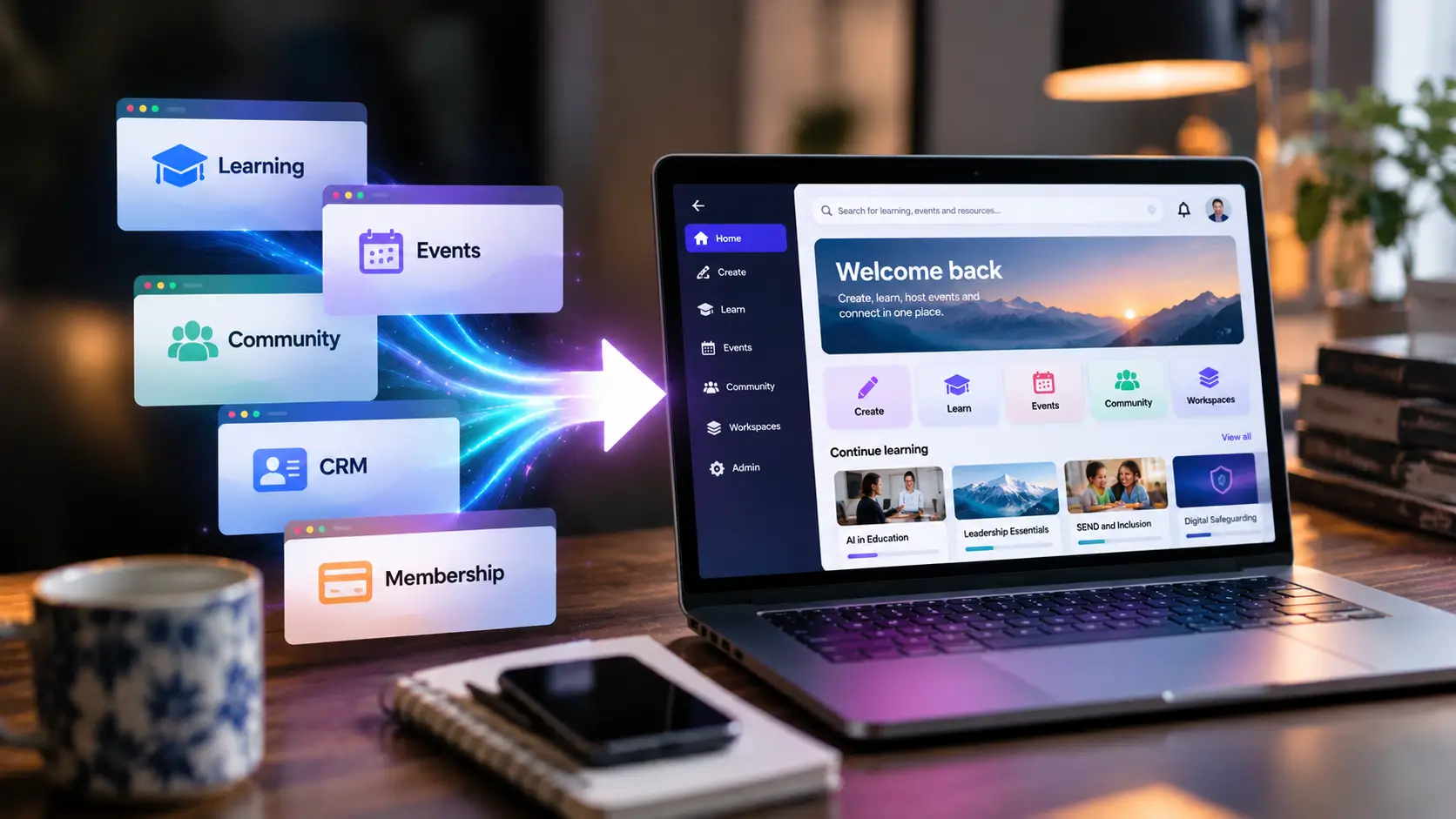
A platform where organisations can create learning experiences, build communities, run events, publish jobs, assess skills and provide personalised AI-supported learning.
A platform that connects the development of knowledge with opportunities to use that knowledge.
And, importantly, a platform that schools, colleges, universities, local authorities, training providers and employers can shape together.
The ambition is not to replace existing institutions.
It is to help them work more effectively together.
The Next Generation Deserves a First Chance
There is a sentence in Milburn's report that captures the issue particularly well.
He writes that the young people he has met are not seeking an easier life. They want a fair opportunity to build one.
That distinction matters.
We often discuss youth unemployment as though the primary challenge is changing young people's attitudes, skills or motivation.
Sometimes those things do need support.
But Milburn asks us to examine something larger.
The systems surrounding young people.
The opportunities employers create.
The pathways education providers offer.
The connections between learning, experience and work.
And whether we are prepared to redesign those systems around the next generation.
For me, this is the most compelling opportunity for Learner Journey.
Not simply to become another learning management system.
Not simply to become another jobs board.
But to help create the digital infrastructure connecting learning, skills, employers and opportunity.
Because the most important question we can ask a young person is not simply:
What do you want to learn?
It is:
Where do you want that learning to take you, and how can we help you get there?
That is the journey we should be building.
And that is the change the Milburn Report challenges us to make.
About Learner Journey
Learner Journey is an AI-first learning and employability platform developed by Webanywhere. It brings together learning paths, AI tutoring, assessments, events, communities, jobs and asynchronous interviews to help organisations connect education with skills development and employment opportunities.
Our ambition is to work with education providers, employers, local authorities and training organisations to build more connected pathways into work.
Explore Learner Journey:
https://www.learnerjourney.com
Read the Milburn Report:
From a Welfare State to a Working State: A New Settlement for the Next Generation