10 Ways AI Can Reduce Teacher Workload
Teaching has always involved work that happens long after pupils leave the classroom.
Founder, Learner Journey
Teaching has always involved work that happens long after pupils leave the classroom.
Planning lessons. Creating resources. Marking. Writing feedback. Preparing quizzes. Producing reports. Answering questions. Tracking progress. Organising CPD.
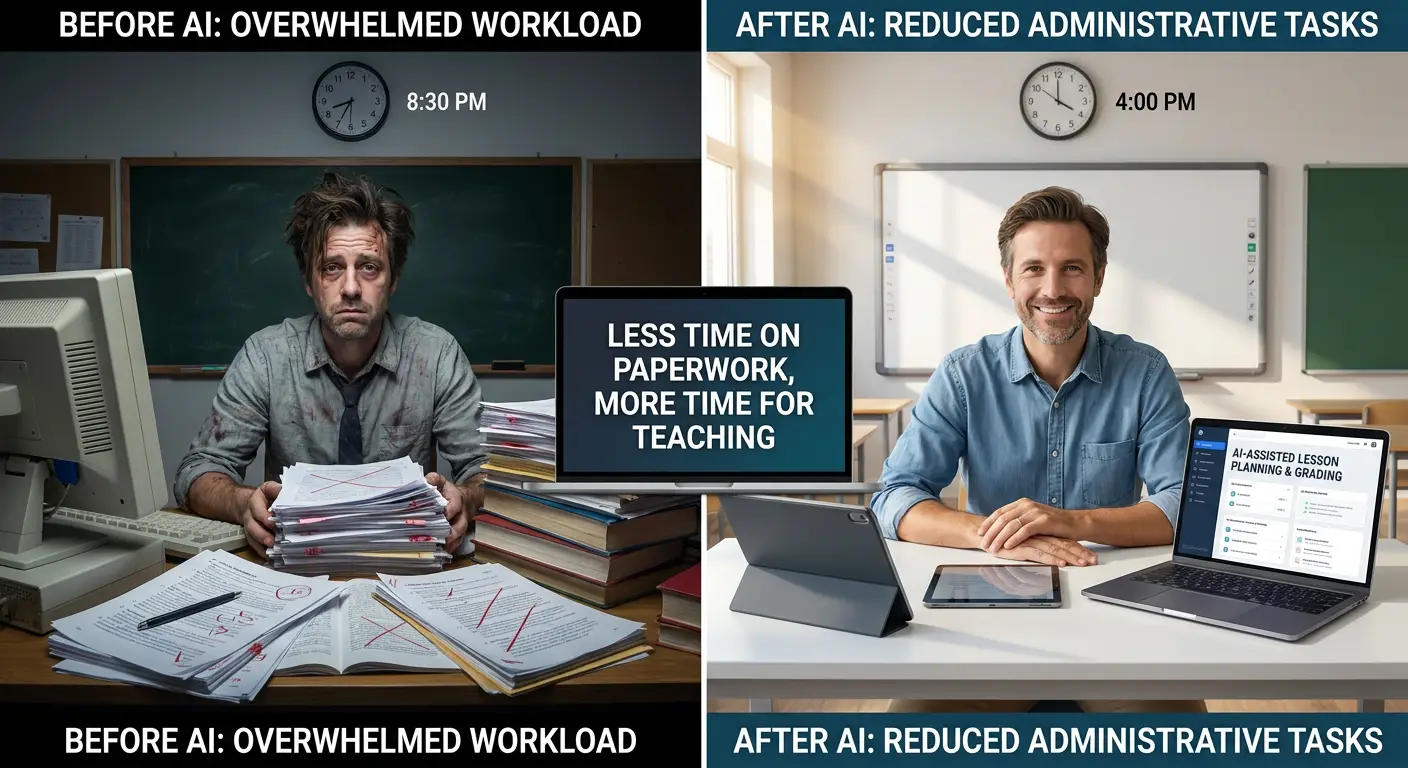
AI won’t remove the need for great teachers. But it can remove some of the repetitive work surrounding great teaching.
Used responsibly, AI can give teachers something particularly valuable: time.
Here are 10 practical ways schools can use AI to reduce teacher workload — and how platforms such as Learner Journey can help.
1. Create first drafts of learning content
One of the simplest uses of AI is turning an idea into a first draft.
Instead of starting with a blank page, a teacher might enter:
“Create an introduction to photosynthesis for Year 6 pupils, followed by five key questions.”
Within seconds, AI can produce a starting point that the teacher can review, adapt and improve.
Learner Journey supports prompt-to-page creation, allowing educators to quickly turn ideas and existing knowledge into structured learning content.
The benefit: less time staring at a blank screen and more time applying professional judgement.
2. Generate quizzes and knowledge checks
Writing good assessment questions takes time.
AI can help teachers generate:
Multiple-choice questions
Knowledge checks
Revision activities
End-of-topic quizzes
Questions at different levels of difficulty
With Learner Journey, quizzes can sit directly alongside learning content, with learner progress recorded automatically.
Teachers can therefore move from simply creating a quiz to actually understanding what learners know.
The benefit: faster assessment creation and better visibility of learning.
3. Give learners immediate support with an AI Tutor
Teachers frequently answer the same questions repeatedly.
“What does this mean?”
“Can you explain that again?”
“Where do I find the answer?”
An AI Tutor can provide an additional layer of support.
Learner Journey includes an AI Tutor/Coach that can work with the learning material available to the learner. It can provide explanations and guidance while using permissions and guardrails to control what information it can access.
Importantly, the goal isn’t to replace the teacher.
It is to deal with some of the routine questions so teachers have more time for the conversations where human expertise matters most.
The benefit: learners receive support without every question becoming another task for the teacher.
4. Personalise explanations
A classroom can contain pupils with very different levels of prior knowledge and confidence.
Traditionally, differentiation can mean creating several versions of the same resource.
AI makes another approach possible.
A teacher can take one explanation and ask AI to:
simplify the language;
provide an analogy;
create a worked example;
produce a summary;
generate extension questions.
The teacher remains responsible for checking that the resulting material is appropriate.
The benefit: differentiation becomes faster without removing teacher oversight.
5. Turn existing knowledge into structured learning
Schools already possess huge amounts of useful information.
It may be sitting in:
Word documents
PDFs
presentations
policies
training materials
videos
staff expertise
The problem is that information isn’t always organised as an effective learning experience.
Learner Journey allows organisations to combine pages, quizzes, learning paths, assessments, slides, forms, videos, podcasts, images and files into structured learning experiences.
AI can help accelerate the process of transforming existing knowledge into usable learning.
The benefit: schools get more value from content they have already created.
6. Reduce repetitive feedback
Feedback is essential, but not every piece of feedback needs to begin from scratch.
AI can help generate an initial response based on a learner’s work, highlight possible gaps or suggest areas that require closer attention.
The teacher can then review and personalise that feedback.
This distinction matters.
The strongest model isn’t:
AI replaces teacher feedback.
It is:
AI prepares the groundwork; the teacher applies professional judgement.
The benefit: teachers spend their limited time where their expertise adds the greatest value.
7. Identify where learners are struggling
Teachers don’t just need more data.
They need useful information.
Digital learning can help capture progress through learning paths, quizzes and assessments. AI can then help make sense of patterns across that information.
Instead of manually working through multiple sources, teachers can more quickly identify questions such as:
Who hasn’t completed the work?
Which concepts are causing difficulty?
Where might additional teaching be needed?
Learner Journey includes progress tracking alongside learning activities, helping educators see engagement and completion without maintaining separate spreadsheets.
The benefit: less administrative analysis and faster intervention.
8. Make staff CPD easier to manage
Teacher workload isn’t confined to classroom teaching.
Schools and MATs also have to organise safeguarding updates, compliance training, professional development, events and internal learning.
That often creates another collection of emails, spreadsheets, forms and certificates.
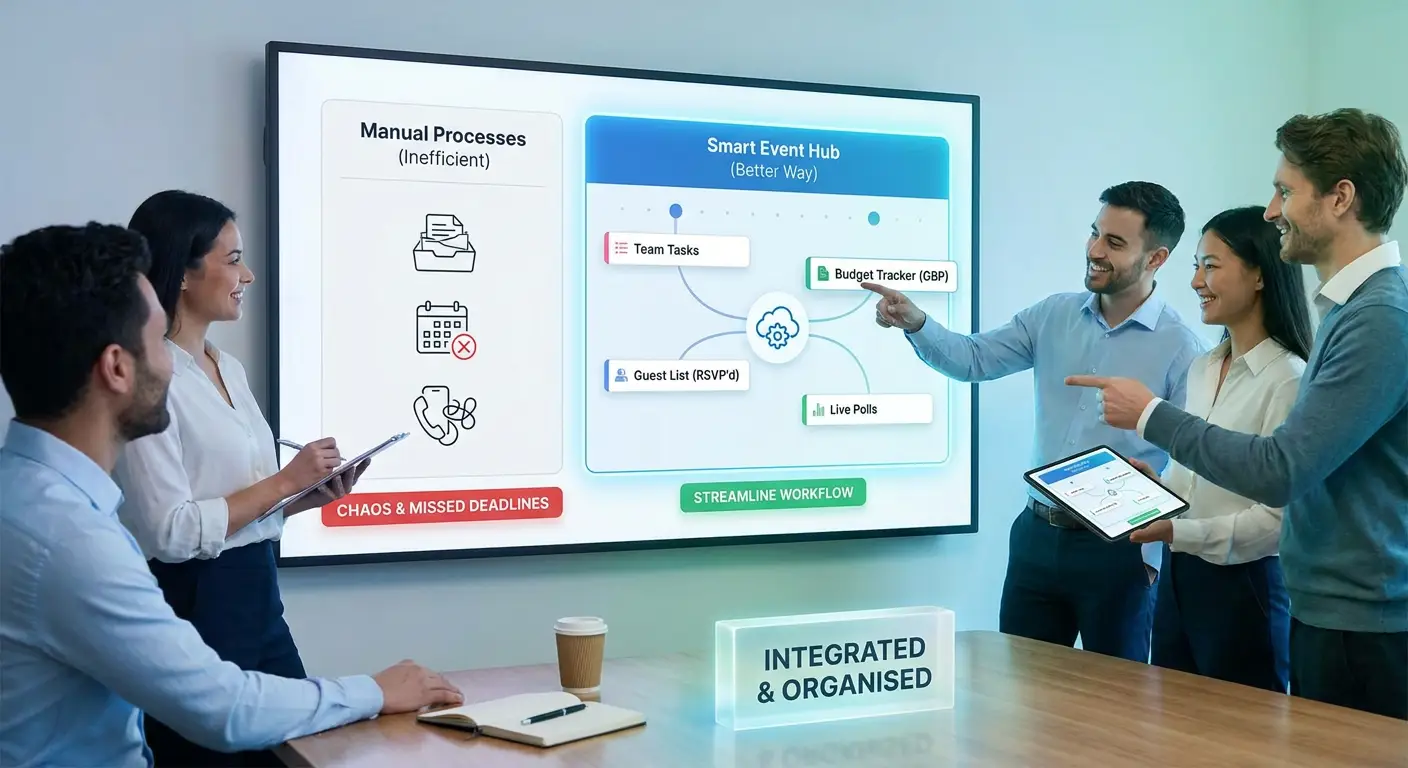
Learner Journey can bring learning, events and professional development into one platform.
Schools can create CPD learning paths, organise events, track attendance and progress, and issue certificates.
Certificates can be generated for learning paths, quizzes and events, reducing another layer of manual administration.
The benefit: less time managing CPD administration and more time developing staff.
9. Create resources in different formats
Not every learner wants to consume information in the same way.
One topic might work as:
a written page;
a presentation;
a quiz;
a video;
a podcast;
an interactive activity.
Creating all those formats manually can be unrealistic for a busy teacher.
AI dramatically reduces the effort required to repurpose material.
A detailed explanation can become a summary. A summary can become quiz questions. A lesson outline can become a learning page.
Learner Journey is designed around this idea of bringing multiple forms of learning content together rather than forcing everything into a traditional course format.
The benefit: richer learning experiences without multiplying preparation time.
10. Give teachers back time
This may ultimately be the most important application of AI.
The question schools should ask isn’t simply:
“What can AI do?”
A better question is:
“What are teachers currently spending time doing that technology could safely help with?”
If AI saves five minutes creating a quiz, ten minutes adapting a resource, fifteen minutes organising CPD records and twenty minutes answering routine questions, those small gains begin to accumulate.
Across a school — and particularly across a MAT — the potential saving becomes significant.
But reducing workload should not mean reducing quality.
The aim should be to automate administration, accelerate creation and augment professional judgement.
Teachers should remain firmly in control.
AI should give teachers more time to teach
There is understandable concern about what AI means for education.
Schools need appropriate policies, safeguarding, data protection and clear expectations about acceptable use. AI-generated material also needs professional oversight.
But avoiding AI altogether carries its own cost.
Teachers are already under significant workload pressure. If carefully implemented technology can reduce repetitive administration and content creation, schools should explore where it can genuinely help.
That’s one of the ideas behind Learner Journey.
Learner Journey brings together AI-assisted content creation, learning pages, quizzes, assessments, learning paths, AI tutoring, progress tracking, multimedia content, events, bookings and certificates in one platform.
Rather than adding another disconnected tool to a school’s technology stack, the aim is to reduce the number of separate processes required to deliver learning and professional development.
The future of AI in education shouldn’t be about having fewer teachers.
It should be about giving great teachers more time to do the things only great teachers can do.
Try Learner Journey
Schools and Multi-Academy Trusts can use Learner Journey to explore AI-enabled learning, staff development and professional development in a controlled environment.