How to Automate CPD Certificates After Training Events with Learner Journey
How to Automate CPD Certificates After Training Events with Learner Journey

How to Automate CPD Certificates After Training Events with Learner Journey
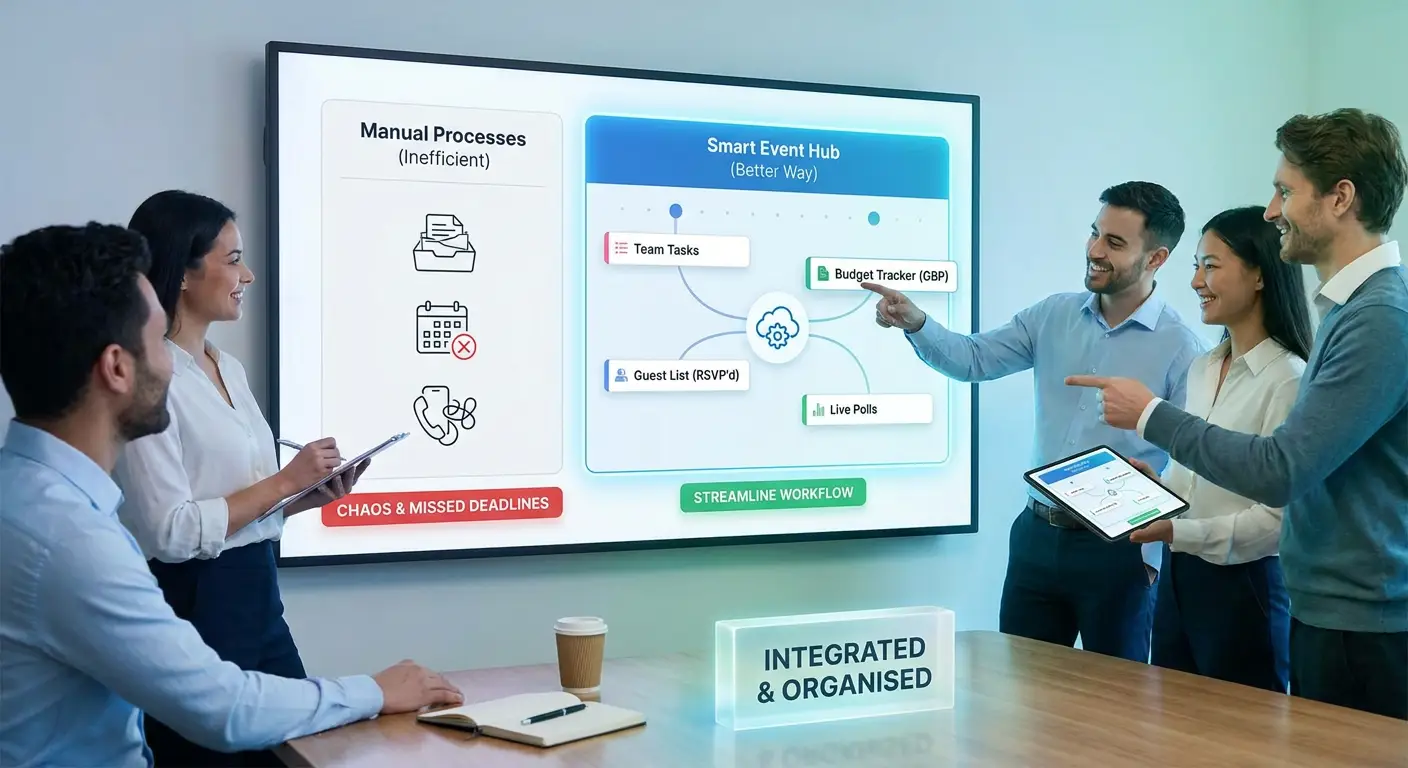
Still creating CPD certificates manually, chasing attendance records and managing training across spreadsheets? Learner Journey brings everything together in one platform — from event bookings and learning activities to automated certificates and progress tracking.
The Problem: Managing CPD Is Taking Too Much Time
Delivering professional development should be about helping people learn, develop new skills and improve their performance.
But for many organisations, managing Continuing Professional Development (CPD) has become an administrative headache.
Consider what happens when a Multi-Academy Trust, Teaching School Hub, university or training provider organises a professional development event.
First, someone creates the event information and shares it with potential participants.
Then registrations arrive through emails, online forms or spreadsheets.
Someone needs to track bookings, respond to questions, send reminders and manage attendance.
After the training finishes, the administrative work continues.
Attendance records need checking. Certificates must be created. Names need adding to templates. PDFs need generating. Emails must be sent.
And when someone asks for evidence of their training six months later, another member of staff has to find the original records.
The problem isn’t delivering the training. It’s managing everything around it.
For organisations running dozens or hundreds of training events every year, these small administrative tasks quickly add up.
The Hidden Cost of Manual CPD Administration
Imagine a Multi-Academy Trust delivering 100 professional development events each year, with an average of 25 participants.
That’s 2,500 registrations, attendance records and potentially 2,500 certificates.
If preparing and emailing each certificate takes just three minutes, that’s 125 hours spent on certificate administration alone.
And that doesn’t include the time spent managing registrations, answering enquiries, tracking participation or producing reports.
For many organisations, the real cost of CPD isn’t just the training itself.
It’s the fragmented systems and manual processes required to deliver it.
The Solution: One Connected Platform for CPD
This is the problem Learner Journey was designed to solve.
Instead of managing training events, online courses, assessments, certificates and learning records through separate tools, Learner Journey brings them together in one connected platform.
Organisations can create training events, manage registrations, deliver learning, assess understanding and issue professional certificates without repeatedly transferring information between different systems.
The platform includes several connected modules:
Events: Create, promote and manage professional development events.
Learning Paths: Structure training into courses and development programmes.
Pages and Content: Create learning materials and resources.
Quizzes and Assessments: Check understanding and measure learning.
Certificates: Generate, personalise and distribute digital certificates.
AI Tutor: Support participants with personalised, AI-powered learning assistance.
Analytics and Progress Tracking: Monitor participation and learning activity.
Each module addresses a different part of the CPD administration problem.
Together, they create a more efficient way to deliver professional development.
1. Events: Stop Managing Training Bookings Through Emails and Spreadsheets
The Problem
Many organisations still manage CPD bookings using a combination of email invitations, online forms and spreadsheets.
This creates unnecessary work.
Administrators need to manually track registrations, update attendance lists, respond to booking enquiries and communicate changes.
When events have limited capacity, waiting lists or paid places, things become even more complicated.
How Learner Journey Events Solves It
The Learner Journey Events module gives organisations a central place to create, publish and manage training events.
Each event can have its own professional booking page, complete with event details, dates, location, speakers and registration information.
Participants can book online, while administrators manage registrations through the platform.
Features include:
Online event registration and booking.
Free and paid training events.
Event capacity management.
Waiting lists for fully booked events.
Custom registration questions.
Booking confirmations and event communications.
Promotional codes and discounts.
Public, private and invitation-only events.
Branded event pages.
Attendee lists and CSV exports.
For organisations delivering regular CPD, this removes much of the need to manage separate booking spreadsheets and email chains.
Example:
A Teaching School Hub runs 15 professional development workshops during a term.
Instead of managing 15 separate booking forms and spreadsheets, the hub publishes all its events through Learner Journey.
Teachers can discover available training, register online and receive booking information.
The administration team manages everything from one place.
The result: Less booking administration and a more professional experience for participants.
2. Learning Paths: Turn Individual Training Events into Structured CPD Programmes
The Problem
Professional development rarely ends with a single workshop.
A teacher might attend a safeguarding session, complete an online assessment and then participate in a follow-up workshop.
A school leader might undertake a six-month leadership development programme.
A workplace learner might need to complete several training modules before receiving certification.
When these activities are managed separately, it becomes difficult to understand someone’s overall progress.
How Learner Journey Learning Paths Solves It
The Learning Paths module allows organisations to combine learning activities into structured programmes.
Instead of treating every workshop or online resource as a separate activity, organisations can create a connected learning experience.
A learning path might include:
An introductory learning page.
A training video or presentation.
Supporting reading materials.
An interactive quiz.
A practical assessment.
A completion certificate.
Learners work through the programme while their progress is recorded.
Example:
A Multi-Academy Trust creates a six-week SEND professional development programme.
Participants complete a series of online modules covering inclusive teaching, classroom adaptations and supporting learners with additional needs.
Each module includes learning resources and an assessment.
Rather than managing six separate training activities, the trust provides one structured learning programme.
The result: More consistent training delivery and clearer visibility of learner progress.
3. Pages and Content: Stop Distributing Training Materials Across Multiple Systems
The Problem
Training resources often end up scattered across different platforms.
Presentation slides are emailed after workshops.
PDFs are stored in shared folders.
Videos are hosted separately.
Additional resources are sent through follow-up messages.
Participants struggle to find the information they need, and administrators spend time repeatedly distributing the same materials.
How Learner Journey Content Solves It
Learner Journey allows organisations to create and organise digital learning materials directly within the platform.
Training providers can develop learning pages containing text, images, videos, documents and other supporting resources.
These can be included within structured learning paths or shared as standalone learning materials.
Organisations can also use AI-assisted authoring to help develop content more efficiently.
Example:
Following a safeguarding workshop, participants need access to presentation slides, guidance documents and further reading.
Rather than sending multiple email attachments, the training provider makes the materials available through Learner Journey.
Participants have a central location for their learning resources.
The result: Less time distributing resources and easier access to learning materials.
4. Quizzes and Assessments: Know Whether Learning Has Actually Happened
The Problem
Attending a training session doesn’t necessarily mean someone has understood the content.
For some CPD activities, attendance is sufficient.
For others, particularly compliance-related training or professional qualifications, organisations may need evidence that participants have demonstrated understanding.
Without an assessment system, this often means using additional forms, spreadsheets or external quiz tools.
How Learner Journey Quizzes and Assessments Solves It
The Quizzes and Assessments modules allow organisations to check understanding as part of the learning experience.
Training providers can create quizzes, knowledge checks and assessments linked to their learning materials.
Results can be used to help determine whether participants have successfully completed the required learning activities.
Example:
A school trust delivers an online safeguarding refresher course.
Participants work through learning materials and complete a short knowledge assessment.
The trust can use the results to help confirm that learners have met the programme’s completion requirements.
This provides more meaningful evidence than simply recording that someone opened a training resource.
The result: Better evidence of learning and a more structured approach to professional development.
5. Certificates: Stop Creating and Emailing CPD Certificates Manually
The Problem
This is where many training teams lose valuable time.
Once an event or course has finished, administrators often need to:
Check who attended or completed the training.
Open a certificate template.
Enter each participant’s name.
Add the training title and completion date.
Export individual PDF certificates.
Email certificates to participants.
Keep records of certificates issued.
Respond to requests for replacement certificates.
For an organisation delivering thousands of training places annually, this can become a major administrative task.
How Learner Journey Certificates Solves It
The Learner Journey Certificates module simplifies the creation, management and distribution of professional training certificates.
Certificates can be issued for supported learning activities, including:
Training Events: Provide certificates to participants who have completed professional development events.
Learning Paths: Recognise the completion of structured learning programmes.
Quizzes: Award certificates following successful completion of relevant assessments.
Organisations can use branded certificate designs to create a consistent professional appearance.
Learner Journey supports:
Personalised participant certificates.
Organisation branding.
PDF certificate generation.
Email certificate delivery.
Digital certificate records.
Certificate verification.
Certificate revocation when necessary.
Sharing achievements through LinkedIn certificate links.
This removes much of the repetitive work associated with preparing and distributing certificates.
Example: Automating Certificates After a CPD Workshop
Imagine a Teaching School Hub delivering a professional development workshop to 80 teachers.
Without Learner Journey:
An administrator exports the attendee list, checks names, prepares 80 certificates, creates PDFs and emails each participant.
With Learner Journey:
The event registrations are already recorded within the platform.
Once attendance or completion has been confirmed, certificates can be issued using the organisation’s branded design.
Learner Journey generates the PDF certificates and supports their distribution by email.
Participants receive their certificates without the administrator needing to prepare every document individually.
The result: Hours of repetitive certificate administration can be reduced to a much simpler process.
6. AI Tutor: Give Learners Support Beyond the Training Event
The Problem
Traditional professional development often follows a familiar pattern.
Participants attend a workshop, receive some resources and return to their normal responsibilities.
But what happens when they have questions afterwards?
What if they need help applying what they learned?
What if they want to revisit a concept but don’t have immediate access to the trainer?
Too often, the learning experience ends when the event finishes.
How Learner Journey AI Tutor Solves It
The Learner Journey AI Tutor provides AI-powered support to help participants engage with their learning.
Depending on the content and permissions configured by the organisation, learners can ask questions and receive guidance connected to their learning materials.
This can help participants revisit concepts, explore topics and reinforce their understanding.
Example:
A teacher completes a professional development programme about supporting pupils with SEND.
Several weeks later, they want to revisit a strategy discussed during the training.
Instead of searching through old emails and presentation files, they can use the AI Tutor to explore the relevant learning materials and ask follow-up questions.
The AI Tutor supports the learning experience rather than replacing professional trainers or organisational guidance.
The result: Professional development becomes an ongoing learning experience rather than a one-off event.
7. Analytics and Progress Tracking: Understand What’s Happening Across Your CPD Programmes
The Problem
For organisations delivering professional development at scale, one of the biggest challenges is visibility.
Administrators and leaders need answers to questions such as:
How many people registered for our training?
Which courses are participants completing?
How far have learners progressed?
Which assessments have been completed?
Which certificates have been issued?
Which learning programmes are attracting the most interest?
When information is spread across separate systems, producing reports becomes time-consuming.
How Learner Journey Progress Tracking Solves It
Learner Journey brings learning activity and progress information into the platform.
Administrators can monitor relevant participation, completion and learning data across supported activities.
Event registration information, learning progress, assessment results and certificate records provide a more connected picture of professional development.
For organisations running multiple programmes, this reduces reliance on disconnected spreadsheets.
Example:
A Multi-Academy Trust delivers leadership development, safeguarding, curriculum training and SEND CPD across its schools.
Using Learner Journey, the trust can manage these activities through one platform and review the information captured by the relevant modules.
This helps central teams understand programme participation and learning activity without manually combining records from several unrelated systems.
The result: Better visibility, more consistent records and less administrative reporting work.
What Does a Complete CPD Journey Look Like in Learner Journey?
The real benefit of Learner Journey comes from using its modules together.
Consider a Multi-Academy Trust delivering a professional development programme for 200 teachers.
Stage | Learner Journey module | What happens |
|---|---|---|
1. Promote training | Events | Publish a branded CPD event |
2. Manage bookings | Events | Participants register online |
3. Deliver training | Events and Pages | Provide workshops and resources |
4. Extend learning | Learning Paths | Offer structured follow-up activities |
5. Check understanding | Quizzes and Assessments | Record assessment results |
6. Support learners | AI Tutor | Provide ongoing learning assistance |
7. Recognise completion | Certificates | Generate and distribute certificates |
8. Review outcomes | Progress Tracking | Monitor learning activity and completion |
Instead of eight disconnected processes, the organisation manages its professional development through one connected platform.
This is particularly valuable for organisations delivering training repeatedly throughout the year.
Who Can Benefit from Learner Journey?
Multi-Academy Trusts
Manage professional development across multiple schools, provide consistent training resources and reduce central administration.
Teaching School Hubs
Publish CPD programmes, manage teacher registrations, deliver professional learning and issue certificates.
Universities
Support continuing professional development, short courses, professional training and learning programmes.
Training Providers
Manage free and paid training events, deliver online learning and issue professional certificates.
Professional Membership Organisations
Provide members with events, learning resources, assessments and certificates within one connected platform.
Workplace Learning Teams
Deliver employee development, monitor learning progress and simplify training administration.
How Much Administrative Time Could Learner Journey Save?
Let’s return to the example of an organisation delivering 100 CPD events annually.
With 25 participants per event, that’s 2,500 potential certificates each year.
If manually creating and distributing each certificate takes three minutes, the organisation spends approximately 125 hours annually on certificates alone.
At an illustrative administrative cost of £20 per hour, that’s £2,500 in staff time.
And certificates are only one part of the process.
Additional time is spent managing event bookings, distributing resources, collecting assessments and preparing reports.
By bringing these activities into Learner Journey, organisations can reduce duplicated data entry, streamline administration and spend more time delivering valuable learning.
Actual savings will depend on the organisation’s existing processes, event volumes and completion requirements.
The objective isn’t simply to create certificates faster. It’s to make the entire professional development process easier to manage.
Frequently Asked Questions
Can Learner Journey automatically generate CPD certificates?
Yes. Learner Journey supports certificate generation for training events, learning paths and quizzes, including personalised PDF certificates and email delivery.
Can we use our organisation’s branding?
Yes. Organisations can use branded certificate designs to create a consistent professional experience.
Can Learner Journey manage training event bookings?
Yes. The Events module supports online registrations, capacity management, waiting lists, free and paid bookings, and event communications.
Can we combine face-to-face CPD with online learning?
Yes. Learner Journey supports training events alongside online learning content, quizzes, assessments and structured learning paths.
Can participants receive certificates by email?
Yes. Learner Journey supports PDF certificate generation and email delivery.
Can certificates be verified?
Yes. Learner Journey includes certificate verification features to help confirm the authenticity of issued certificates.
Can Learner Journey support CPD across multiple schools?
Yes. Multi-Academy Trusts and other education organisations can use Learner Journey to coordinate professional development activities across their organisations.
Stop Managing CPD Through Disconnected Systems
Professional development should be about learning, not administration.
Yet too many organisations still rely on spreadsheets, email attachments, separate booking systems and manually created certificates.
Learner Journey offers a more connected approach.
One platform to manage events.
One place to deliver learning.
One system to assess progress.
One way to issue professional certificates.
By bringing these activities together, Learner Journey helps organisations reduce repetitive administration and create a better experience for everyone involved.
Whether you’re delivering teacher CPD, leadership development, workplace training or professional learning programmes, Learner Journey can help simplify the process.
Ready to Automate Your CPD Certificates?
Discover how Learner Journey can help your organisation manage training events, deliver online learning and issue professional certificates.