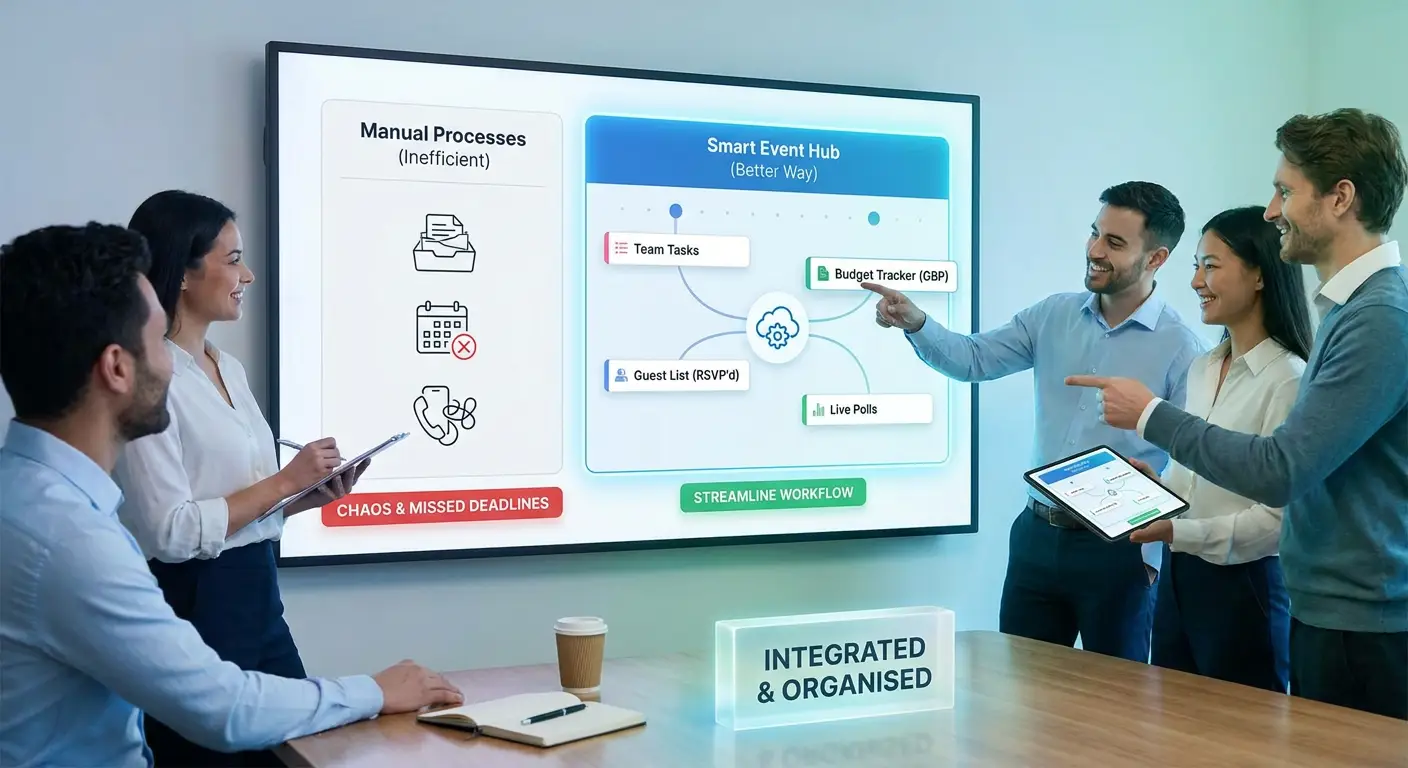
Is your learner journey building vital capability?
Organisations accumulate learning, but is it building vital capability? Discover how the Learner Journey provides a compass, guiding individuals to develop the skills your organisation truly needs.
Founder, Learner Journey
Most organisations have more learning than ever before.
More courses. More content. More platforms. More webinars. More communities. More data. And, increasingly, more AI-generated learning resources.
But there is a more important question:
Is all this activity actually building the capability your organisation needs?
That is a surprisingly difficult question to answer.
An employee might have completed twelve courses this year. They may have attended three events, watched several videos and earned certificates.
But are they better equipped to do their job? Are they developing the capabilities the organisation will need next year? And, most importantly, what should they do next?
This is the problem Learner Journey is designed to solve.
The problem isn’t a lack of learning
For years, organisations have focused on providing access to learning.
Build a catalogue. Buy an LMS. Upload courses. Track completions.
The result is that many organisations now have enormous amounts of learning content spread across multiple systems.
The challenge has changed.
People don’t necessarily need more learning.
They need better guidance through it.
Imagine arriving in a city you’ve never visited before. You could be given a database containing every road, restaurant, hotel, shop and landmark.
Technically, you have everything you need.
But it isn’t nearly as useful as a map showing:
You are here. This is where you’re going. This is your next step.
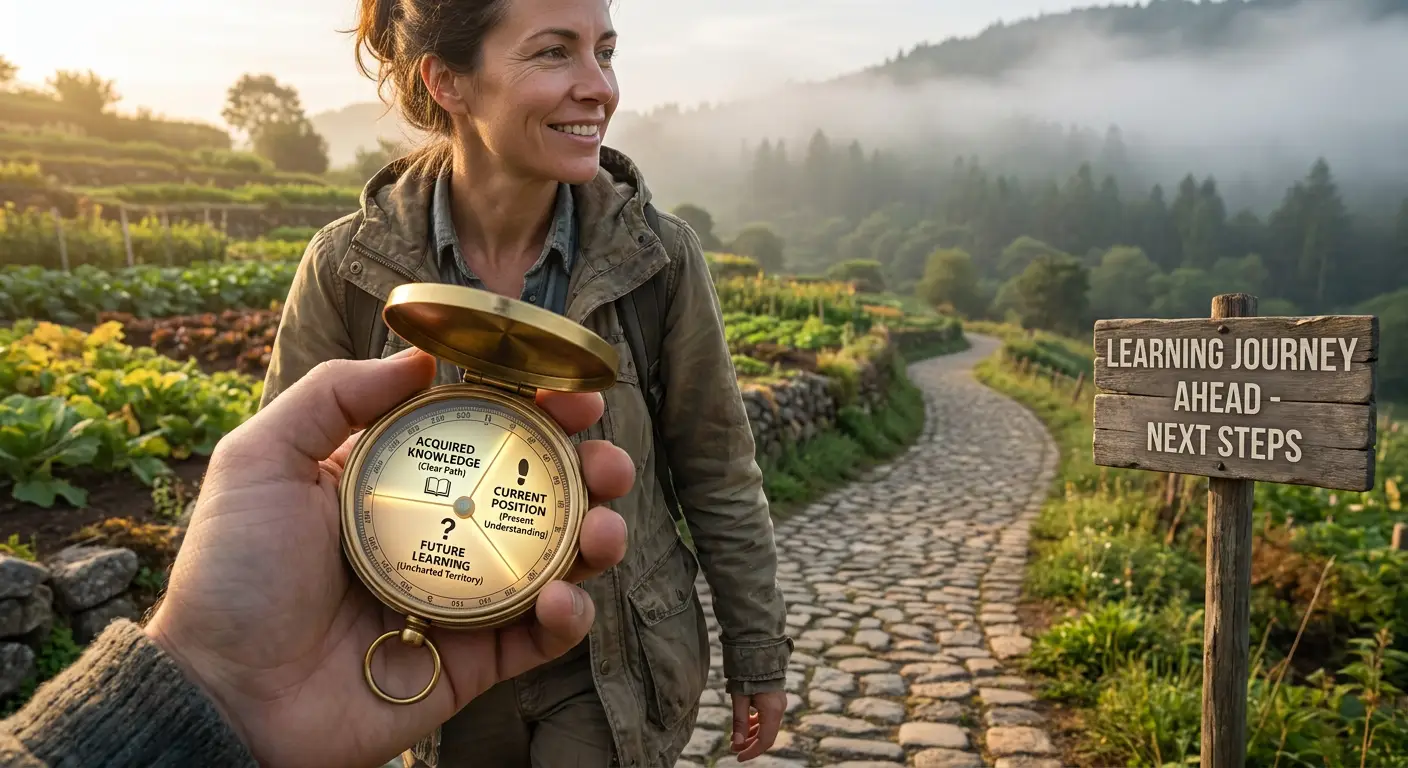
That is the idea behind the Learner Journey Capability Compass.
A capability compass for every learner
Learner Journey connects organisational priorities with individual development.
Instead of presenting people with another catalogue of content, it continuously helps answer three questions:
Where am I now?
Where do I need to get to?
What should I do next?
And that next step doesn’t always have to be another course.
It might be:
completing a short learning activity
practising a skill
attending an event or workshop
speaking to a colleague or mentor
joining a community
taking an assessment
contributing to a project
applying learning in the workplace
completing a real-world challenge
earning a certificate
exploring a new role or opportunity
Learning becomes a journey rather than a library.
From content catalogue to capability system
Traditional learning platforms often start with content.
Learner Journey starts with capability.
An organisation can identify the skills, knowledge, behaviours and capabilities that matter to its strategy and then connect learning experiences to those outcomes.
Learner Journey can bring together pages, learning paths, quizzes, assessments, events, videos, podcasts, files, forms and other resources within one workspace.
But content is only part of the picture.
The platform can also connect learning with people, events, communities, projects and opportunities.
This matters because people rarely develop meaningful capability simply by consuming content.
They develop by learning something, trying it, receiving feedback, discussing it with others and applying it.
AI makes the compass possible
Artificial intelligence changes what a learning platform can be.
Historically, learning platforms largely waited for people to search through catalogues and decide what to do.
Learner Journey’s AI Tutor and Coach can provide a much more active experience.
It can understand the learner’s role, their progress, the resources available to them and the context of their workspace.
Rather than simply answering questions, AI can help guide the journey.
You’ve completed this. Based on your role and progress, here’s what you should consider next.
The experience becomes increasingly personal without requiring learning teams to manually construct a different programme for every employee.
And because the AI operates within the organisation’s learning environment and permissions, its guidance can be grounded in the resources and opportunities that are actually available.
The view for learning leaders changes too
The capability compass isn’t only useful to the learner.
It gives learning and organisational leaders a different question to measure.
Instead of:
How many courses did people complete?
They can begin asking:
Is capability moving in the direction our organisation needs?
That creates a much more valuable picture.
Learning leaders can see engagement and progress, but increasingly connect those signals to organisational priorities.
For example, imagine an organisation decides that responsible use of AI is a strategic capability.
The objective shouldn’t simply be:
500 employees completed the AI course.
The real objective is closer to:
Our people understand AI, can use it appropriately in their roles, are practising with it, can demonstrate their understanding and are increasingly applying it to useful business problems.
Course completion might contribute to that outcome.
But it isn’t the outcome.
Connecting fragmented learning
There is another important benefit.
Most organisations already have learning scattered everywhere.
There may be an LMS for formal courses, Teams or Slack for conversations, Eventbrite for events, Google or Microsoft Forms for registrations, shared drives for resources, spreadsheets for tracking and numerous external providers.
Learner Journey doesn’t assume that every useful learning experience has to become a traditional course.
Instead, it provides a place where those experiences can form part of a coherent journey.
The learner sees the destination and their next step rather than having to understand the organisation’s technology stack.
That distinction matters.
People shouldn’t have to navigate systems. They should be able to navigate their development.
From completion to direction
For twenty years, digital learning has been exceptionally good at recording what people have done.
The next generation of learning technology needs to become much better at helping people decide what to do next.
That is the shift Learner Journey is designed around.
From catalogues to journeys.
From courses to capabilities.
From generic learning to personalised guidance.
From completion statistics to organisational visibility.
And from asking:
“What learning do we have?”
to the much more important question:
“Are our people developing the capabilities we need?”
Learner Journey provides the compass connecting the two.
Because the future of learning isn’t about giving people more content.
It’s about giving every learner a clear next step - and giving every organisation confidence that those steps are taking its people in the right direction.