How to Track Staff Training and CPD Across Multiple Schools
Why the biggest challenge in professional development isn’t delivering training. It’s knowing what’s actually happening.
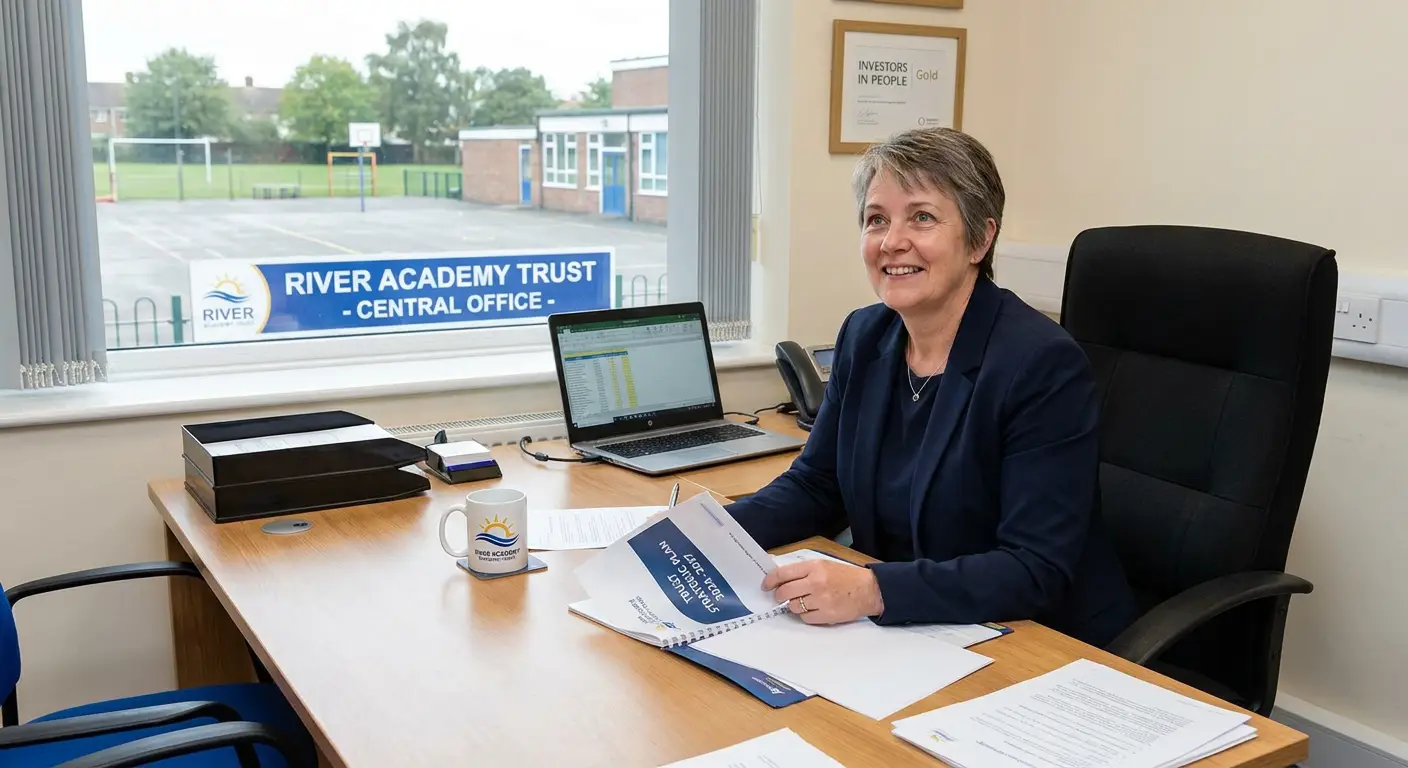
Imagine you’re the CEO of a multi-academy trust with 15 schools.
Across those schools, you employ 1,200 people. Teachers, teaching assistants, school leaders, administrative staff, safeguarding officers and support teams.
Every week, something interesting happens.
A teacher attends a safeguarding refresher. A teaching assistant completes an online SEND course. A deputy head participates in a leadership programme. Twenty members of staff attend a twilight CPD session on behaviour management.
All perfectly ordinary activities.
Now imagine asking one simple question:
“Can you show me all the professional development our staff have completed over the past 12 months?”
You might expect the answer to be straightforward.
It rarely is.
Instead, someone begins opening spreadsheets. Someone else searches through emails. A school business manager checks an attendance register. Another colleague remembers that certificates were uploaded somewhere, although nobody is entirely sure where.
Three days later, you have something resembling an answer.
But you’re still not confident it’s complete.
This is one of the peculiar contradictions of modern education. Schools invest considerable time, money and energy in developing their people, yet many struggle to maintain a complete picture of that investment.
And the larger the organisation becomes, the more complicated the problem gets.
The Problem Nobody Notices Until They Need the Data
Consider two schools.
School A has 40 members of staff. Its headteacher knows most of them personally. When someone attends training, there’s a reasonable chance the headteacher knows about it.
School B belongs to a multi-academy trust employing 2,000 people across 25 schools.
The trust has a central professional development team. Individual schools have CPD coordinators. External providers deliver courses. Some training happens online, some in person and some through professional networks.
The trust might actually provide better professional development than School A.
But it faces a curious problem.
The more training it delivers, the harder it becomes to understand what training has taken place.
This isn’t necessarily a failure of leadership.
It’s a failure of information architecture.
Most organisations have systems for managing money, payroll, attendance and performance. These systems provide a relatively consistent view of what’s happening across the organisation.
Professional development, however, often operates differently.
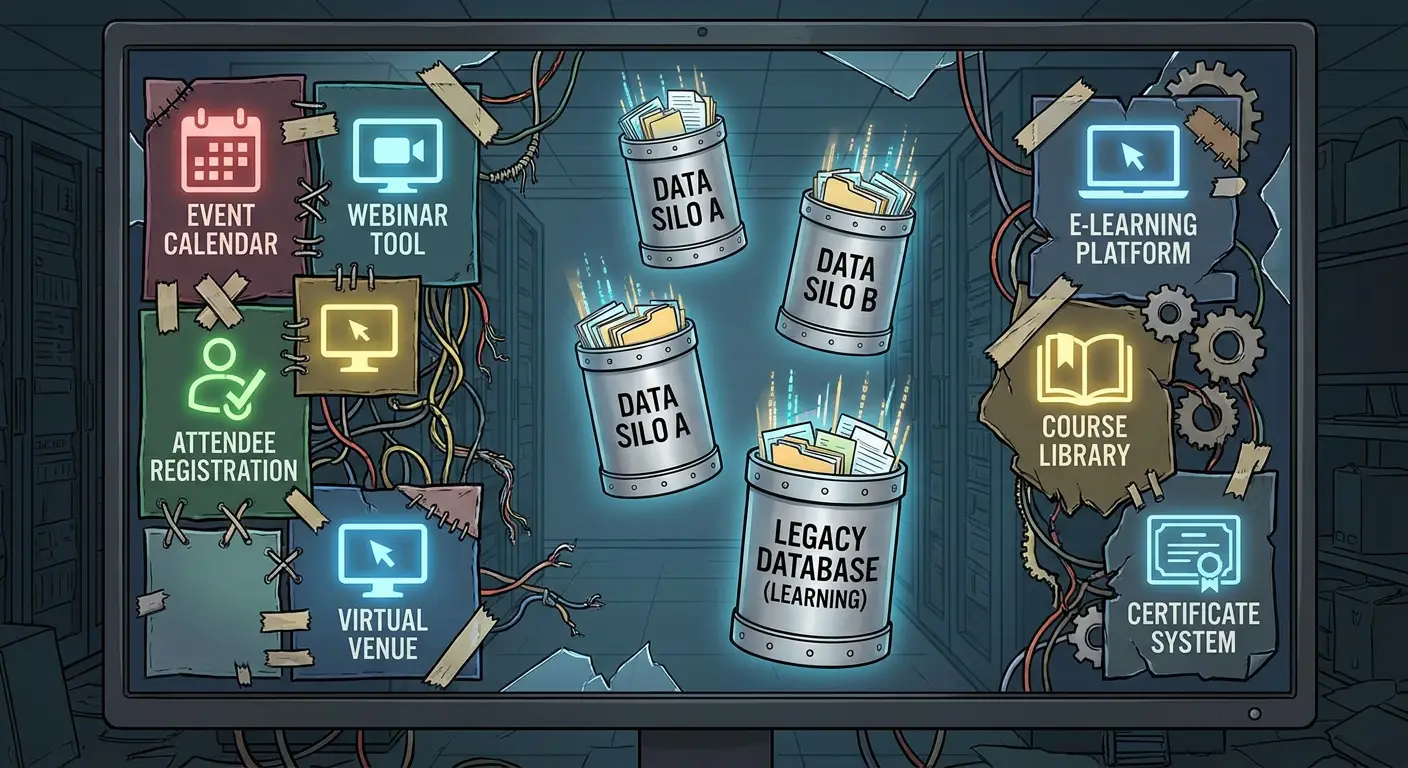
Training records live in spreadsheets, booking platforms, learning management systems, shared drives, email inboxes and sometimes filing cabinets.
Each system might work perfectly well in isolation.
The problem is that they don’t necessarily talk to one another.
And that creates a much bigger challenge than simply keeping records.
The Hidden Cost of Fragmented CPD Records
Imagine a trust planning its professional development programme for the following academic year.
The central team wants to know three things.
First, which staff have completed mandatory training?
Second, which schools have invested most heavily in professional development?
Third, where are the gaps?
These aren’t particularly complicated questions.
But answering them can become an enormous administrative exercise.
Each school is asked to submit its records. The records arrive in different formats. Some include training dates. Others include only course names. Some distinguish between attendance and completion. Others don’t.
A central administrator spends days combining everything.
Then comes the difficult part: deciding whether the information is accurate.
This is where fragmented systems become genuinely expensive.
Not necessarily because of software licensing costs, but because of the time people spend compensating for the absence of a joined-up system.
Every duplicated spreadsheet, every manually reconciled attendance register and every email asking whether someone completed a course represents an administrative cost.
Individually, these tasks seem insignificant.
Collectively, across an entire trust, they become substantial.
And perhaps most importantly, time spent chasing training records is time that could have been spent improving professional development itself.
Why Booking Training and Tracking Training Are Two Different Things
There’s an important distinction that often gets overlooked.
Booking someone onto a course isn’t the same as recording their professional development.
Suppose a headteacher asks their academy business manager to book six teaching assistants onto a SEND training session.
The business manager makes the booking.
The six staff attend.
Everyone is satisfied.
But what happens next?
Does the trust automatically know those six people attended? Does each individual’s professional development record reflect the training? Can the central team identify the school, the course and the date?
And six months later, can the trust produce a report showing how many teaching assistants across all its schools completed SEND training?
This is the difference between an event booking system and a genuine CPD management system.
One helps organise training.
The other helps an organisation understand its investment in people.
Ideally, the two should be connected.
The Case for One Professional Development Record
There’s a simple idea at the heart of effective staff CPD tracking software.
Every member of staff should have a professional development record that follows their learning over time.
It shouldn’t matter whether training takes place online or in person.
It shouldn’t matter whether someone books themselves onto a course or an administrator books on their behalf.
And it shouldn’t matter whether the training is organised by an individual school or the central trust.
The information should contribute to one coherent record.
For a teacher, this means being able to see their professional development history.
For a headteacher, it means understanding training participation within their school.
For a central trust team, it means seeing the bigger picture across multiple schools.
And for the organisation as a whole, it means professional development becomes something that can be understood and improved, rather than simply administered.
What Does Effective CPD Tracking Look Like?
Let’s return to our imaginary trust of 15 schools.
This time, imagine the trust uses a shared platform to manage its professional development.
The central team creates a safeguarding refresher course.
School administrators book relevant staff onto the session. Individual staff can also register themselves where appropriate.
Attendance is recorded.
The training contributes to each person’s CPD history.
A few weeks later, the central team opens a reporting dashboard.
Instead of requesting 15 separate spreadsheets, it can examine training activity across the trust.
It can identify which schools participated, review individual staff records and analyse professional development over a particular period.
The information is already there.
No reconciliation exercise.
No searching through emails.
No wondering whether the latest spreadsheet is actually the latest spreadsheet.
The administrative process becomes almost invisible.
And that is precisely the point.
The best administrative systems don’t simply make paperwork faster. They remove the need for much of the paperwork in the first place.
How Learner Journey Helps Multi-Academy Trusts
This is the problem we’ve been working to solve with Learner Journey.
Learner Journey brings professional development, events, learning content and reporting together within a single platform.
For multi-academy trusts, teaching school hubs and other education organisations, the objective is straightforward: make it easier to organise staff development while maintaining a clearer picture of learning across the organisation.
1. Manage CPD Events in One Place
Trusts can create and manage professional development events, including face-to-face workshops, online training sessions and conferences.
Staff can browse available training and register for relevant opportunities.
Administrators can also add attendees manually.
This matters because school training isn’t always booked by the person attending.
An academy business manager might need to register several colleagues. A headteacher might request places for a particular team. A member of the central trust team might coordinate attendance across multiple schools.
Learner Journey supports these administrative booking scenarios without requiring every participant to make their own booking.
2. Track Training by Individual
Every member of staff has their own learning activity and professional development history within the platform.
This helps administrators understand which training an individual has undertaken and provides staff with a clearer record of their development.
It also makes professional development easier to review during conversations about career progression, performance and future training needs.
3. Report Across Schools
One of the most valuable capabilities for multi-academy trusts is centralised CPD reporting.
Learner Journey provides reporting on professional development activity, allowing administrators to review training undertaken by individuals, examine activity associated with different settings and see an overview across a selected period.
Rather than relying entirely on separate school-level records, trust leaders can access a more joined-up view of professional development managed through the platform.
4. Combine Events With Online Learning
Professional development doesn’t begin and end with attending an event.
A teacher might attend a workshop, complete a learning module afterwards, take a quiz and receive a certificate.
Learner Journey supports different forms of learning content, including:
Learning paths and structured courses
Interactive pages and assessments
Quizzes and knowledge checks
Video and podcast content
Online and in-person events
Certificates of completion
AI-supported learning experiences
Bringing these activities into one environment creates opportunities for a more complete view of professional development.
It also makes it easier to move beyond one-off training sessions towards more structured learning programmes.
5. Reduce Administrative Work
Perhaps the most immediate benefit is also the least glamorous.
Less administration.
Central teams can coordinate events, manage registrations and access CPD information without maintaining a collection of disconnected spreadsheets.
School administrators can book staff onto training.
Staff can access learning opportunities through the same platform.
And trust leaders can spend less time requesting information that should already be available.
The Question Trust Leaders Should Be Asking
There’s a tendency to judge professional development by how much training an organisation delivers.
How many courses were organised?
How many staff attended?
How many hours of CPD were completed?
These are useful measures.
But they’re only the beginning.
The more interesting questions are about what happens next.
Are staff receiving development that reflects their needs?
Are some schools participating more than others?
Are particular professional development programmes being repeated unnecessarily?
Are there areas where staff need more support?
And, most importantly, is the training making a difference?
A good CPD tracking system won’t answer every one of these questions automatically.
Recording attendance, after all, isn’t the same as measuring impact.
But without reliable information about what training has happened, asking the deeper questions becomes much harder.
You cannot meaningfully evaluate professional development if you cannot reliably identify the development that has taken place.
That’s why CPD tracking should be seen as more than an administrative function.
It’s part of the foundation for improving professional learning.
From Compliance to Professional Growth
For many trusts, the initial motivation for introducing staff CPD tracking software is compliance.
They need to demonstrate that mandatory training has taken place.
Safeguarding is an obvious example.
But once professional development information becomes easier to access, something interesting can happen.
The conversation begins to change.
Instead of asking, “Have we got the records?”, leaders can start asking, “What are the records telling us?”
They can begin looking at participation across schools, identifying gaps and planning development more strategically.
They can explore whether certain programmes should be offered more widely.
They can make better-informed decisions about where to invest their professional development budgets.
The technology hasn’t made those decisions for them.
It has simply made the information more accessible.
And sometimes that’s the difference between an organisation that collects data and one that can actually use it.
A Better Way to Manage CPD Across Multiple Schools
The challenge facing multi-academy trusts isn’t that schools don’t value professional development.
Quite the opposite.
Teachers and school leaders understand that professional learning matters.
The challenge is that the systems used to organise and record that learning haven’t always kept pace with the increasingly complex organisations delivering it.
A trust with 20 schools shouldn’t need 20 separate approaches to recording CPD.
A central professional development team shouldn’t spend days assembling information that could be available through a shared reporting system.
And a teacher shouldn’t have to reconstruct their training history from old emails and certificates.
Professional development is too important to be managed as an afterthought.
The real opportunity isn’t simply to track more training. It’s to understand professional development across the whole organisation, with less effort and greater clarity.
That’s what we’re building Learner Journey to support.
Because the most valuable outcome of a good CPD system isn’t a better spreadsheet.
It’s a better-informed organisation.
Bring Your Trust’s CPD Together With Learner Journey
Learner Journey helps multi-academy trusts, teaching school hubs and education organisations manage staff training, events, online learning and professional development reporting through one platform.
Whether you’re coordinating CPD across five schools or fifty, the aim is the same: reduce administration, improve visibility and make professional learning easier to manage.
Explore Learner Journey: learnerjourney.com
Interested in using Learner Journey across your trust? Get in touch to discuss a pilot and see how the platform could support your professional development programme.